Years of failure
Akasaki and Amano worked for years on gallium nitride when many colleagues had given up on it.
MHI 094 · Exhibition
1989–1993
Documented dateNagoya and Tokushima, Japan
Plate 094
1989–1993
Nagoya and Tokushima, Japan
Isamu Akasaki and Hiroshi Amano grew high-quality gallium nitride crystals in the late 1980s. Shuji Nakamura made a bright blue LED in 1993.
The three shared the 2014 Nobel Prize in Physics.
The world before
Red and green LEDs existed since the 1960s–70s, but without blue there was no way to make white light.
The human achievement
Researchers struggled for decades with gallium nitride. Their breakthrough allowed bright blue LEDs, which, coated with a yellow phosphor, produce white light.
Understanding the invention
The Blue LED, explained in two steps.
Step 01 of 02
In the semiconductor, electrons fall into gaps and release light.
IV
The transformation
Efficient LED bulbs spread worldwide.
Blue LEDs power displays and Blu-ray discs.
LED lighting uses a fraction of the energy of incandescent bulbs, saving electricity and lighting homes without grid power.
Before and after
Before
Incandescent bulbs wasting most energy as heat.
After
LEDs using a fraction.
On larger screens, drag the divider (or use the arrow keys) to give more room to the world before or after.
VI
Its legacy
MHI 094
The Blue LED
Beyond the collection
Off-grid lighting
Solar-charged LED lanterns.
Human stories
Akasaki and Amano worked for years on gallium nitride when many colleagues had given up on it.
Where accounts differ, this museum follows the documented record and says so.
Next in the museum
Related exhibitions
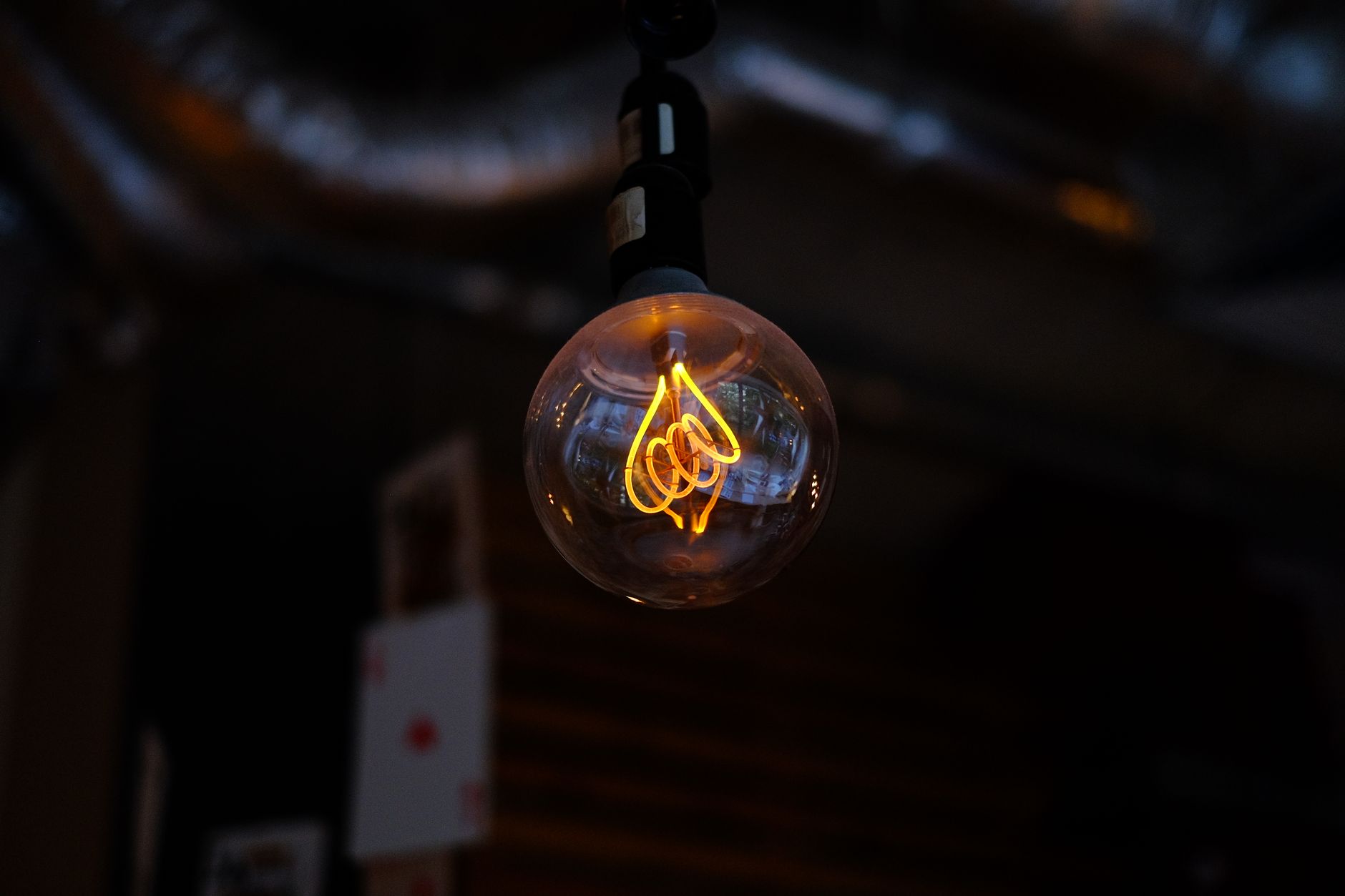 MHI 006The Light Bulb1878–1880A thin filament inside a glass bulb glows when electricity passes through it. A vacuum, or inert gas, stops it from burning away.