Explore · The archive
The collection.
Ninety-five inventions, each with the world before it, the people behind it and the change that followed. Ten are told in full across seven chapters; the rest are shorter exhibitions. Search by name, person or place, or narrow by era and theme.
The archive
Every exhibition, in one list.
Era
Category
95 of 95 exhibitions
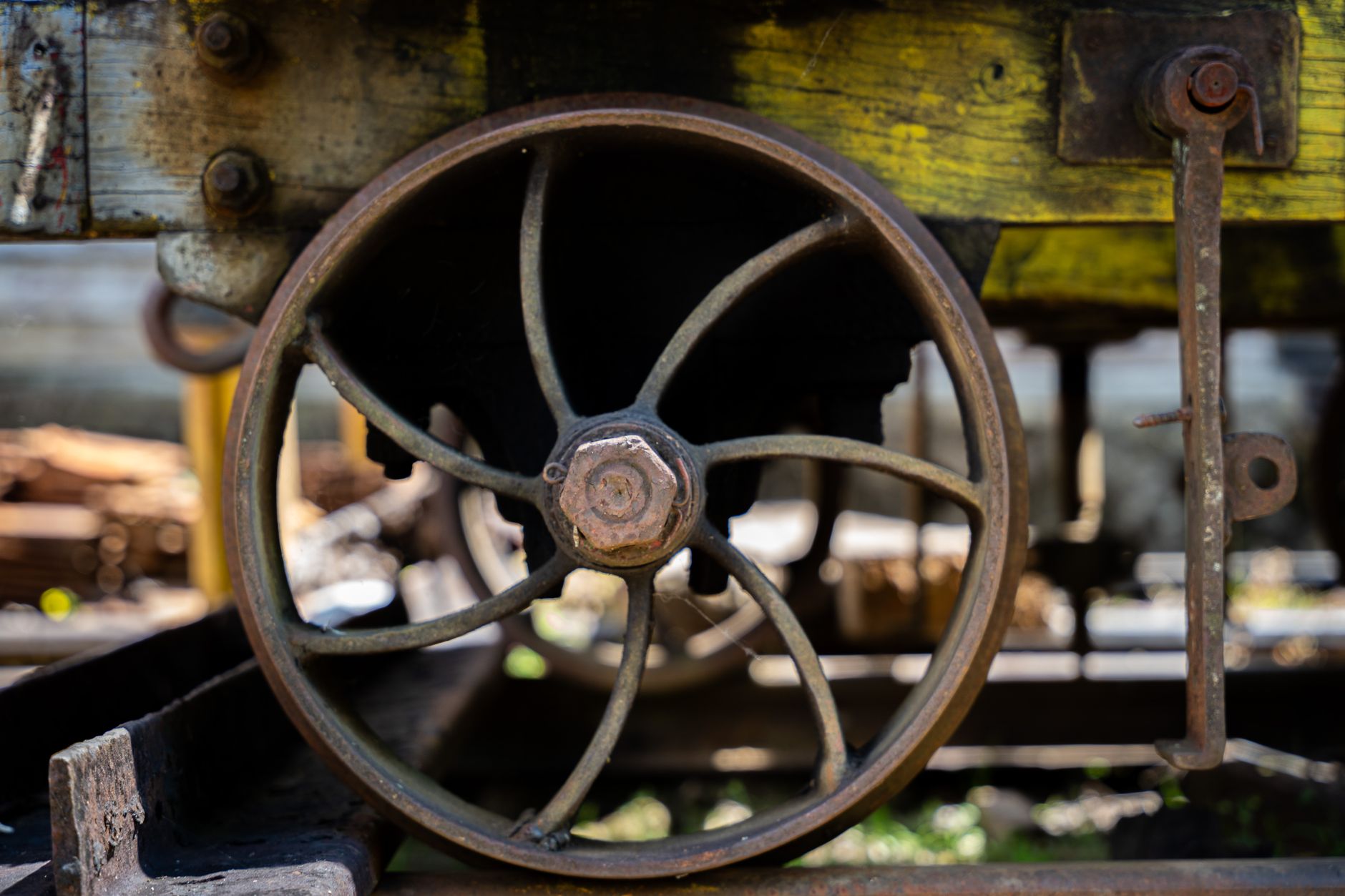
MHI 001 · Antiquity
The Wheel
c. 3500 BCEApproximate date- Place
- Mesopotamia
- People
- Unknown makers
A rotating disc that turned the carrying of loads into the rolling of loads. Its earliest forms were potters’ wheels and only later axle-mounted carts.
Open The WheelMHI 015 · Antiquity
The Plough
c. 4000–3000 BCEApproximate date- Place
- The Near East and Europe
- People
- Early farmers
A pointed tool pulled through the soil by people or animals opens furrows for seed far faster than a hoe or digging stick.
Open The PloughMHI 011 · Antiquity
Cuneiform Writing
c. 3400–3200 BCEApproximate date- Place
- Uruk, Sumer (present-day southern Iraq)
- People
- Sumerian scribes
Marks pressed into wet clay with a cut reed began as a way to record grain, livestock and labour, and grew into a full writing system used for more than three thousand years.
Open Cuneiform WritingMHI 014 · Antiquity
Bronze Metallurgy
c. 3300–3000 BCEApproximate date- Place
- The Near East, with parallel developments elsewhere
- People
- Early metalworkers
Adding tin (or at first arsenic) to copper produces a metal that is harder than copper and easier to cast. It gave its name to an entire age.
Open Bronze MetallurgyMHI 016 · Antiquity
The Sail
c. 3100 BCE (earliest clear depictions)Approximate date- Place
- Egypt and the eastern Mediterranean
- People
- Early boatbuilders and sailors
A sheet of cloth or matting held up to the wind lets a boat travel using a force that costs nothing and never tires.
Open The SailMHI 013 · Antiquity
Papyrus
c. 3000 BCEApproximate date- Place
- Egypt
- People
- Egyptian scribes and craftspeople
Strips cut from the stem of the papyrus plant were laid crosswise, pressed and dried into a smooth, light writing surface that could be rolled and stored.
Open PapyrusMHI 026 · Antiquity
Soap
c. 2800 BCE (earliest evidence)Approximate date- Place
- Babylon, Mesopotamia
- People
- Babylonian craftspeople
Fat boiled with alkaline ash produces a substance that lifts grease and dirt from skin and cloth.
Open SoapMHI 012 · Antiquity
The Alphabet
c. 1900–1050 BCEApproximate date- Place
- Egypt, Sinai and the Levant
- People
- Canaanite-speaking workers and traders
A small set of signs, each standing for one sound, replaced the hundreds of signs needed by earlier scripts. Phoenician traders spread it around the Mediterranean, and Greek writers adapted it.
Open The AlphabetMHI 017 · Antiquity
Glass
c. 2500–1500 BCE (made glass)Approximate date- Place
- Mesopotamia and Egypt; glassblowing in the Roman Levant
- People
- Mesopotamian and Egyptian glassmakers, Syrian glassworkers
Melting sand with ash or natron produces a transparent material that can be coloured, shaped and polished. Glassblowing turned a luxury into an everyday material.
Open GlassMHI 019 · Antiquity
The Water Clock
c. 1400 BCE (oldest surviving example)Approximate date- Place
- Egypt, with later development in Greece, China and the Islamic world
- People
- Egyptian and later Greek, Chinese and Islamic craftspeople
Water flowing at a steady rate from a vessel marked with lines gives a measure of time that works indoors, at night and in cloud.
Open The Water ClockMHI 018 · Antiquity
Coinage
c. 650–600 BCEApproximate date- Place
- Lydia, western Anatolia
- People
- The Lydian kingdom
A piece of metal of known weight, stamped by an authority, could be accepted for its value without being weighed each time.
Open CoinageMHI 020 · Antiquity
The Archimedes’ Screw
c. 3rd century BCE (traditional)Disputed attribution- Place
- Syracuse or Egypt (disputed); Mediterranean
- People
- Archimedes of Syracuse
A spiral inside a tube, turned by a handle, lifts water uphill without pumping.
Open The Archimedes’ ScrewMHI 021 · Antiquity
The Water Wheel
c. 3rd century BCE onwardApproximate date- Place
- The eastern Mediterranean, later across Europe and Asia
- People
- Greek and Roman engineers
A wheel with paddles or buckets turned by flowing water drives a millstone, hammer or pump, replacing human or animal labour.
Open The Water WheelMHI 022 · Antiquity
Roman Concrete
c. 200 BCE onwardApproximate date- Place
- Roman Italy
- People
- Roman builders and engineers
Lime, volcanic ash and rubble mixed into a mortar that set hard, even underwater, let Roman builders form vaults and domes that are still standing.
Open Roman ConcreteMHI 023 · Antiquity
The Antikythera Mechanism
c. 200–100 BCEApproximate date- Place
- Greek world; found off the island of Antikythera
- People
- Unknown Greek makers
A hand-cranked bronze box of interlocking gears modelled the motions of the Sun, Moon and probably other planets and predicted eclipses.
Open The Antikythera MechanismMHI 030 · Medieval & early modern
The Stern-Post Rudder
1st century CE (China); 12th century (Europe)Approximate date- Place
- China, then Europe
- People
- Chinese shipwrights
A flat blade hinged to the back of a ship steers it more precisely and with less effort than a steering oar at the side.
Open The Stern-Post RudderMHI 024 · Antiquity
Paper
105 CE (traditional date)Disputed attribution- Place
- Han dynasty China
- People
- Cai Lun
Plant fibres from bark, rags and old nets are beaten in water, spread on a screen and dried into thin sheets.
Open PaperMHI 025 · Antiquity
The Seismoscope
132 CEDocumented date- Place
- Luoyang, Han dynasty China
- People
- Zhang Heng
A large bronze vessel with dragon heads held balls that dropped from a dragon’s mouth into a toad’s mouth when an earthquake occurred far away, showing its direction.
Open The SeismoscopeMHI 027 · Medieval & early modern
Zero and the Decimal Number System
c. 3rd–7th century CEDisputed attribution- Place
- India
- People
- Brahmagupta, Muhammad ibn Musa al-Khwarizmi
Ten digits and a place-value rule, with zero holding an empty place, let any number be written and calculated with on paper.
Open Zero and the Decimal Number SystemMHI 028 · Medieval & early modern
Woodblock Printing
By the 7th–9th century CEApproximate date- Place
- Tang dynasty China, with early examples in Korea and Japan
- People
- Buddhist monastic and lay printers
Text and images carved in relief on a wooden block, inked and pressed onto paper, can be reproduced hundreds of times.
Open Woodblock Printing
Showing 20 of 95