A father for his son
By the usual account, Dunlop built his first tyres for his young son’s tricycle, to give him a smoother ride on rough ground.
MHI 075 · Exhibition
1888
Documented dateBelfast, Ireland
Plate 075
1888
Belfast, Ireland
John Boyd Dunlop patented a pneumatic tyre in 1888. Robert William Thomson had patented an air-filled tyre in 1845.
Thomson’s patent came first, but it was not commercially developed. Dunlop’s patent was later declared invalid owing to Thomson’s earlier one, yet he is remembered for making it practical.
The world before
Bicycle tyres were solid rubber, giving a rough ride, and cart wheels rattled over stones.
The human achievement
Dunlop wrapped an inflated rubber tube in canvas on his son’s tricycle. Bicycle racers adopted it and won, which promoted it. Detachable tyres made repairs easier.
Understanding the invention
The Pneumatic Tyre, explained in two steps.
Step 01 of 02
Compressed air absorbs bumps instead of passing them to the rider.
IV
The transformation
Bicycles became comfortable and fast, fuelling a cycling boom in the 1890s.
Cars could travel faster with less vibration.
Rides became comfortable and faster, helping bicycles, cars and aircraft.
Before and after
Before
Jolting and slow.
After
A smoother, quicker ride.
On larger screens, drag the divider (or use the arrow keys) to give more room to the world before or after.
VI
Its legacy
MHI 075
The Pneumatic Tyre
Beyond the collection
Vulcanised rubber
Charles Goodyear’s 1839 process made rubber durable.
Human stories
By the usual account, Dunlop built his first tyres for his young son’s tricycle, to give him a smoother ride on rough ground.
Where accounts differ, this museum follows the documented record and says so.
Next in the museum
Related exhibitions
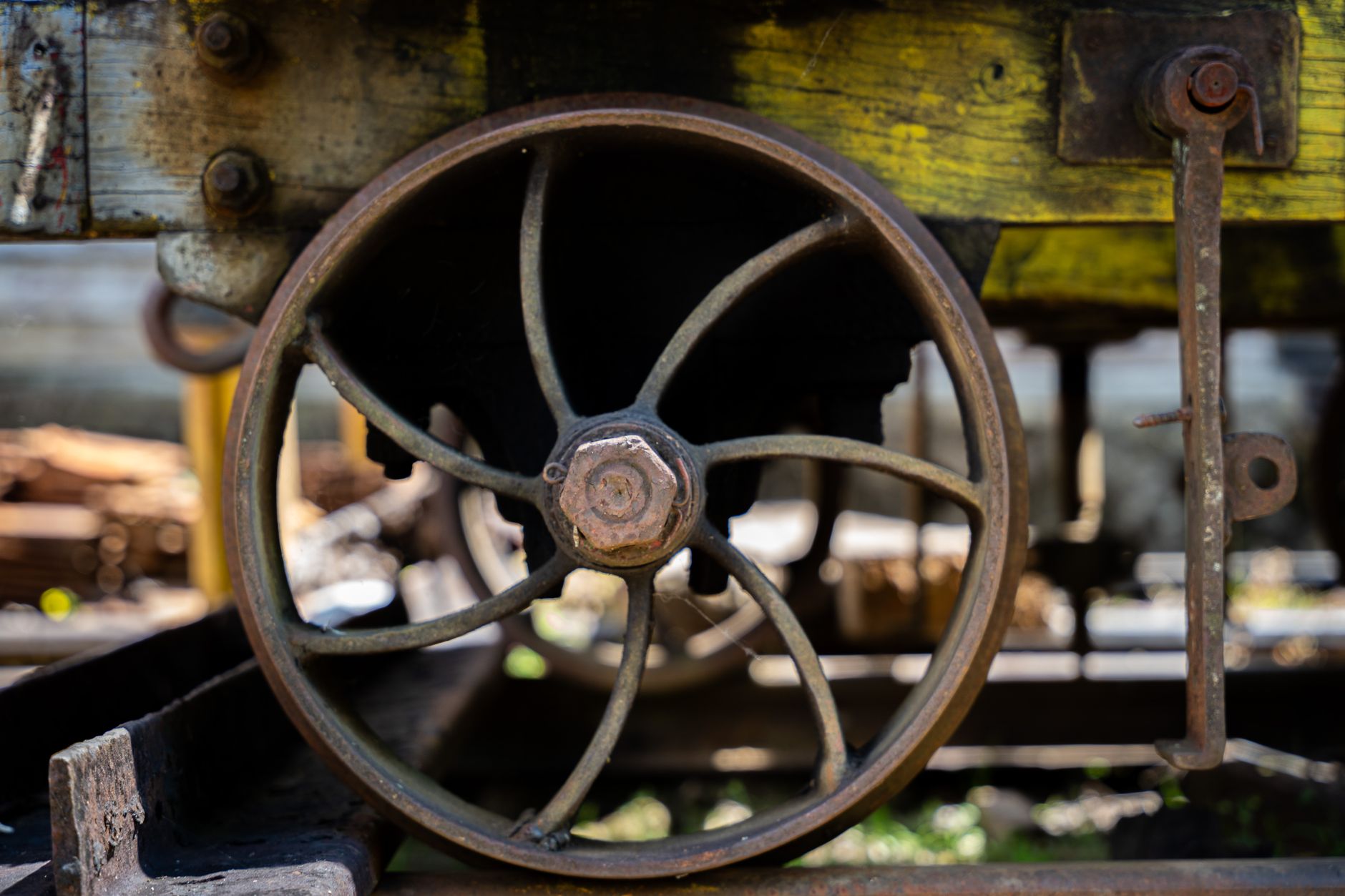 MHI 001The Wheelc. 3500–3350 BCEA disc or spoked ring turning on an axle replaced dragging and carrying with rolling. The oldest surviving wooden wheel with its axle, from the Ljubljana Marshes in Slovenia, has been radiocarbon-dated to about 3150 BCE.