Tull’s reputation
Historians now think Tull’s role has sometimes been overstated; he was one of several improvers in a long process.
MHI 048 · Exhibition
c. 1701 (Tull); earlier forms in Asia and Italy
Disputed attributionEngland; earlier in China, Mesopotamia and Italy
Plate 048
c. 1701
England; earlier in China, Mesopotamia and Italy
Jethro Tull described his horse-drawn drill in England around 1701. Seed drills were used earlier in China and Mesopotamia, and Camillo Torello received a patent in Venice in 1566.
Seed drills existed earlier. Tull’s drill is notable for combining a drilling mechanism with horse-hoeing in rows, and his book Horse-Hoeing Husbandry (1733) spread the idea.
The world before
Farmers broadcast seed by hand, wasting much of it and growing crops in crowded patches.
The human achievement
Tull’s drill used a wooden hopper feeding seed into furrows cut by a plough-like coulter, with a harrow to cover it. It sowed straight rows spaced to allow hoeing.
Understanding the invention
The Seed Drill, explained in two steps.
Step 01 of 02
A mechanism drops seed at regular intervals into the furrow.
IV
The transformation
Higher yields from less seed.
Less sowing labour, more weeding by machine.
Drilling saves seed, raises yields and makes it possible to weed between rows. It was an important step in the British Agricultural Revolution.
Before and after
Before
Walk and scatter by hand.
After
Draw a drill behind a horse.
On larger screens, drag the divider (or use the arrow keys) to give more room to the world before or after.
VI
Its legacy
MHI 048
The Seed Drill
Beyond the collection
Mechanised farming
Modern tractors and planters use precision drilling.
Human stories
Historians now think Tull’s role has sometimes been overstated; he was one of several improvers in a long process.
Where accounts differ, this museum follows the documented record and says so.
Next in the museum
Related exhibitions
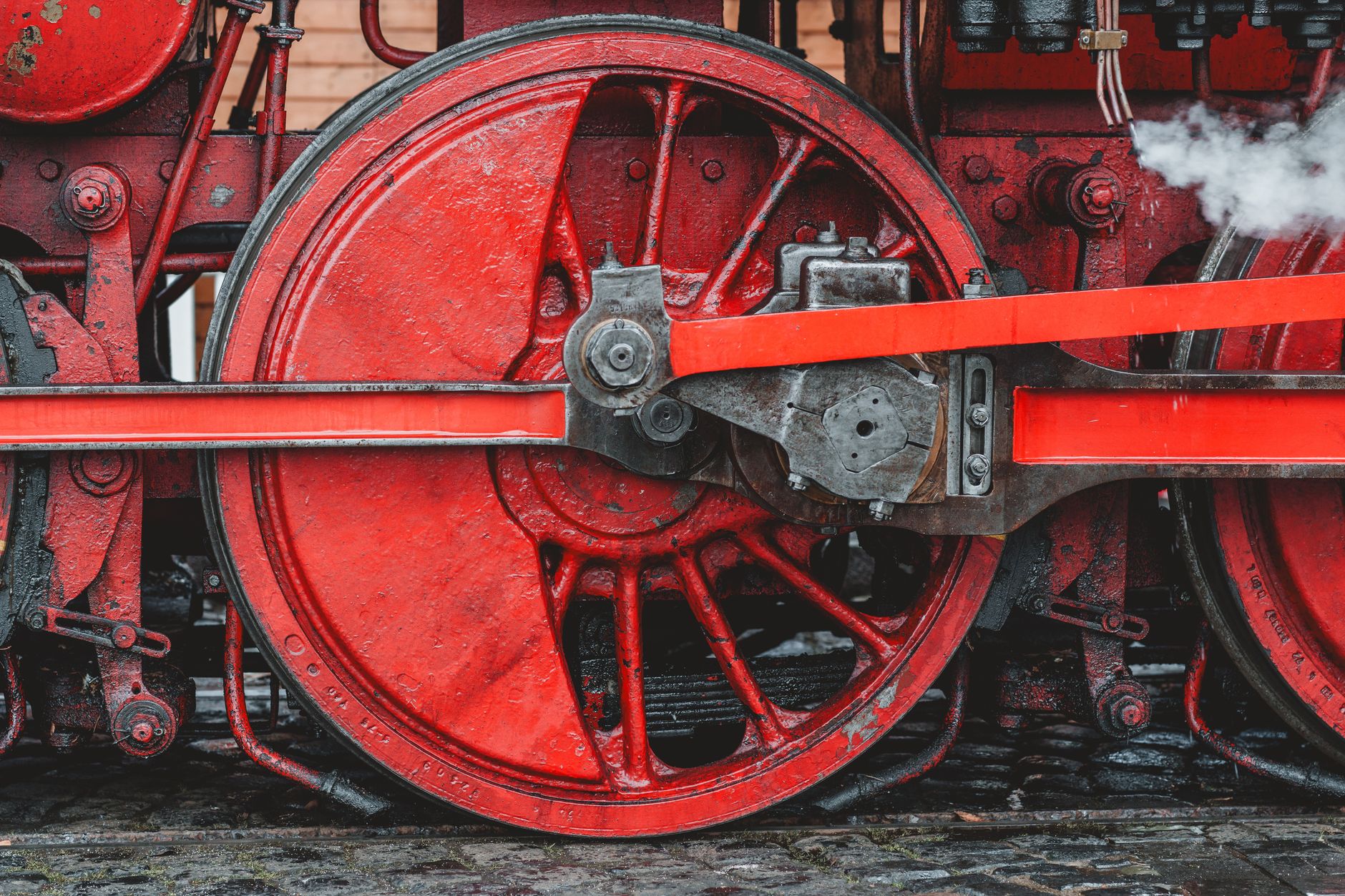 MHI 004The Steam Engine1712 (Newcomen); 1765 (Watt)Heat from burning coal makes steam; steam pushes a piston; the piston turns a wheel. The first practical engines pumped water out of mines. Improved versions powered mills, ships and trains.