The heavy plough
In wetter northern Europe, heavy clay soils needed stronger ploughs with wheels and a mouldboard. Historians debate how much these changed medieval settlement.
MHI 015 · Exhibition
c. 4000–3000 BCE
Approximate dateThe Near East and Europe
Plate 015
c. 4000–3000 BCE
The Near East and Europe
Marks of ploughing preserved under burial mounds in northern Europe, and depictions from Mesopotamia, are dated by context. The first use could be older.
The plough, in the form of the scratch plough or ard, probably spread and evolved over many generations of farmers.
The world before
Fields were prepared by hand with digging sticks and hoes, which limited how much land a household could plant.
The human achievement
Farmers attached a pointed wooden beam, an ard, to a frame and pulled it with oxen. It scratched a groove rather than turning the soil over. Much later, iron ploughshares and mouldboards that turn the soil appeared, especially in northern Europe.
Understanding the invention
The Plough, explained in two steps.
Step 01 of 02
Harnessed animals supply far more power than a person bending over a hoe.
IV
The transformation
Larger harvests supported larger populations and people who did not farm.
Because ploughing needs animals and open fields, ownership and the organisation of land changed.
One farmer with draught animals could cultivate far more land. This produced surplus grain, and with it towns, trade and specialised crafts.
Before and after
Before
Hand digging, a few hundred square metres a day at best.
After
An ox team ploughing several times as much.
On larger screens, drag the divider (or use the arrow keys) to give more room to the world before or after.
VI
Its legacy
MHI 015
The Plough
Beyond the collection
Mechanised farming
Tractor-drawn ploughs apply the same principle using engines.
Human stories
In wetter northern Europe, heavy clay soils needed stronger ploughs with wheels and a mouldboard. Historians debate how much these changed medieval settlement.
Where accounts differ, this museum follows the documented record and says so.
Next in the museum
Related exhibitions
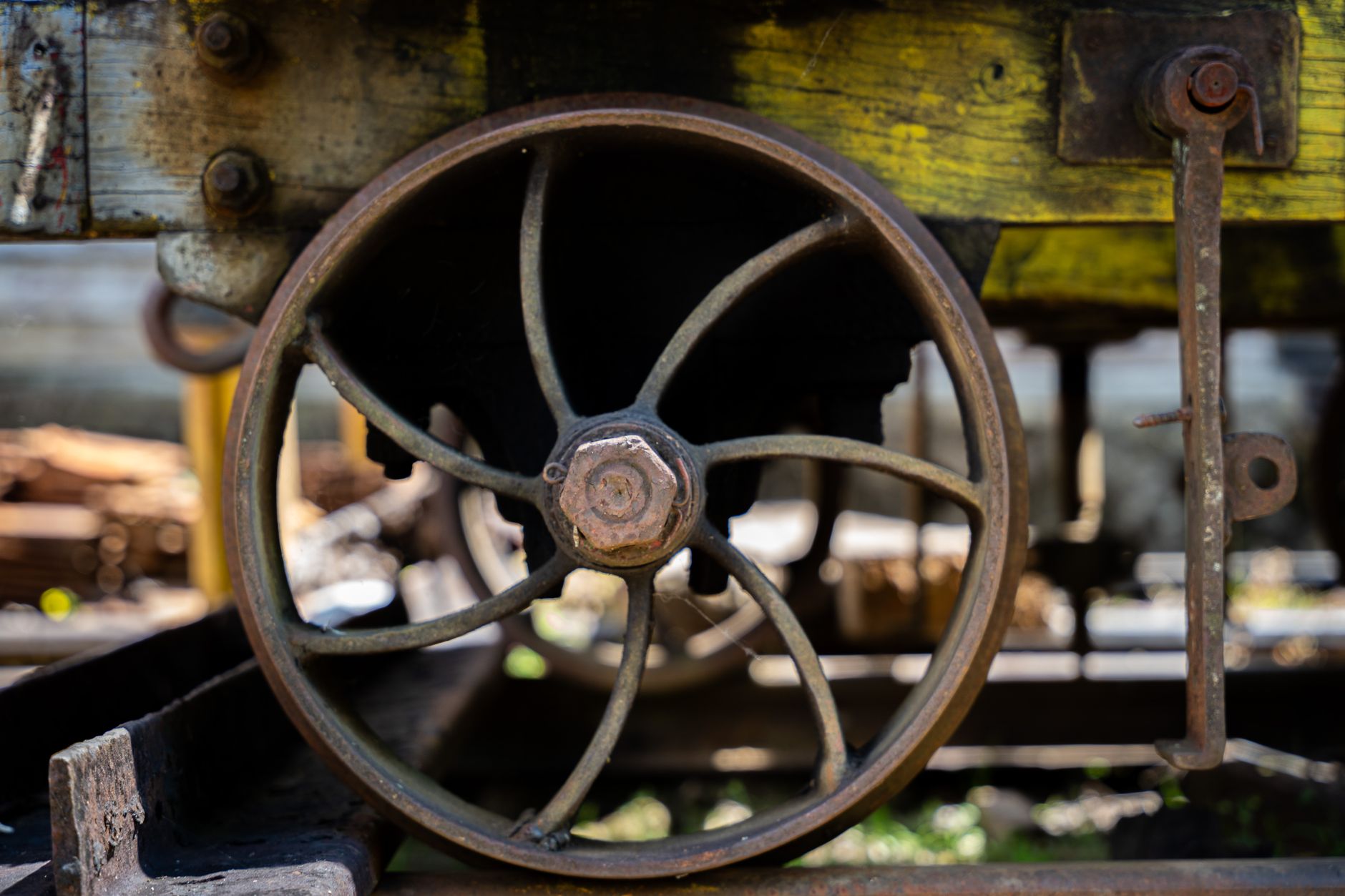 MHI 001The Wheelc. 3500–3350 BCEA disc or spoked ring turning on an axle replaced dragging and carrying with rolling. The oldest surviving wooden wheel with its axle, from the Ljubljana Marshes in Slovenia, has been radiocarbon-dated to about 3150 BCE.