Whittle’s patent lapse
Whittle could not afford the fee to renew his 1930 patent in 1935, so it lapsed. He later received a knighthood.
MHI 082 · Exhibition
1937–1939
Documented dateEngland and Germany
Plate 082
1937–1939
England and Germany
Frank Whittle ran a test engine in April 1937 in England. Hans von Ohain’s engine ran in 1937 in Germany; the Heinkel He 178 made the first jet flight on 27 August 1939.
Whittle and von Ohain worked independently and did not know of each other’s work.
The world before
Aircraft relied on piston engines and propellers, which lose efficiency at high speed and altitude.
The human achievement
Whittle’s first engine ran on a test bed in 1937; the Gloster E.28/39 flew in 1941. Germany’s Messerschmitt Me 262 jet fighter entered service in 1944. The de Havilland Comet, in 1952, was the first jet airliner.
Understanding the invention
The Jet Engine, explained in two steps.
Step 01 of 02
A compressor squeezes air, fuel burns in it, and the hot gases drive a turbine and rush out the back.
IV
The transformation
Air travel became fast and affordable.
Distant places could be reached in hours.
Jets made fast long-distance flight possible and shrank the world. Today’s airliners cross oceans in hours.
Before and after
Before
Days by ship.
After
About seven hours.
On larger screens, drag the divider (or use the arrow keys) to give more room to the world before or after.
VI
Its legacy
MHI 082
The Jet Engine
Beyond the collection
Gas turbines
Used to generate electricity.
Beyond the collection
Spaceflight
Rocket engines use similar ideas.
Human stories
Whittle could not afford the fee to renew his 1930 patent in 1935, so it lapsed. He later received a knighthood.
Where accounts differ, this museum follows the documented record and says so.
Next in the museum
Related exhibitions
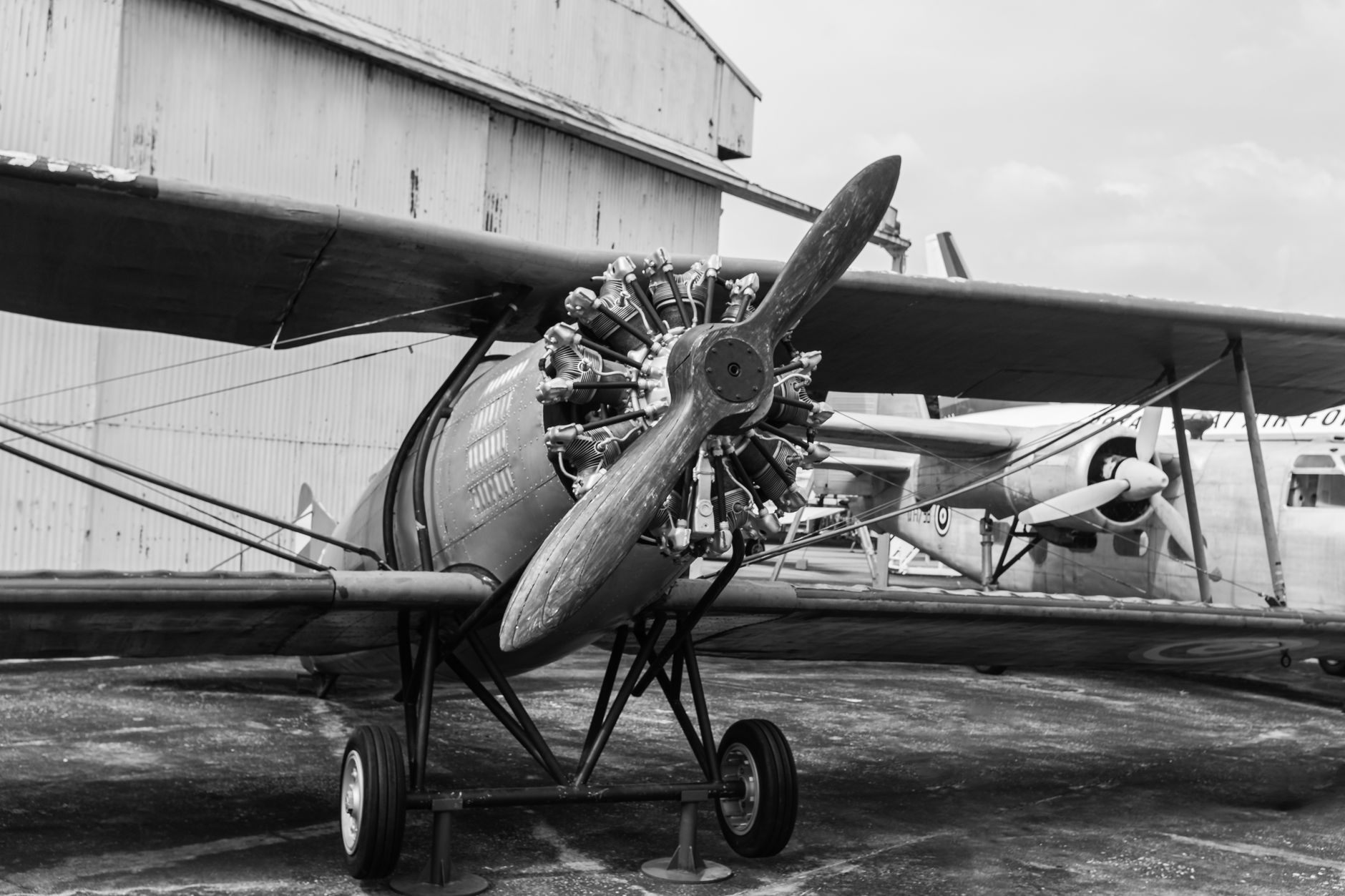 MHI 007The Airplane17 December 1903Wings produce lift as air flows over them; an engine and propeller provide thrust; and movable surfaces let the pilot control the aircraft in three dimensions.