Success announced by phone
After the first reaction, Arthur Compton phoned James Conant: “The Italian navigator has landed in the New World.” The reply: “How were the natives?” “Very friendly.”
MHI 083 · Exhibition
1942; 1954–1956
Documented dateChicago, Obninsk, Cumbria
Plate 083
1942
Chicago, Obninsk, Cumbria
Chicago Pile-1 achieved the first self-sustaining chain reaction on 2 December 1942. The first nuclear plant to supply a power grid, at Obninsk, USSR, began operating in 1954. Calder Hall in the UK followed in 1956.
Hahn received the 1944 Nobel Prize for the discovery of fission; many historians say that Lise Meitner’s contribution deserved recognition.
The world before
Electricity came from coal, oil, gas and hydropower.
The human achievement
Fermi’s team stacked graphite and uranium in a squash court at the University of Chicago. Cadmium rods controlled the reaction. The first commercial-scale plants followed in the 1950s. Accidents at Three Mile Island (1979), Chernobyl (1986) and Fukushima (2011) shaped public opinion.
Understanding the invention
Nuclear Power, explained in two steps.
Step 01 of 02
A neutron splits a uranium nucleus, releasing more neutrons and energy.
IV
The transformation
Nuclear plants now supply about 9% of world electricity.
The same science underlies nuclear weapons.
Nuclear power can generate large amounts of electricity with low carbon emissions, while raising waste, safety and weapon concerns.
Before and after
Before
Burning coal or gas.
After
Using heat from fission.
On larger screens, drag the divider (or use the arrow keys) to give more room to the world before or after.
VI
Its legacy
MHI 083
Nuclear Power
Beyond the collection
Medical isotopes
Reactors produce isotopes used in diagnosis and treatment.
Beyond the collection
Fusion research
Aims to mimic the Sun for cleaner power.
Human stories
After the first reaction, Arthur Compton phoned James Conant: “The Italian navigator has landed in the New World.” The reply: “How were the natives?” “Very friendly.”
Where accounts differ, this museum follows the documented record and says so.
Next in the museum
Related exhibitions
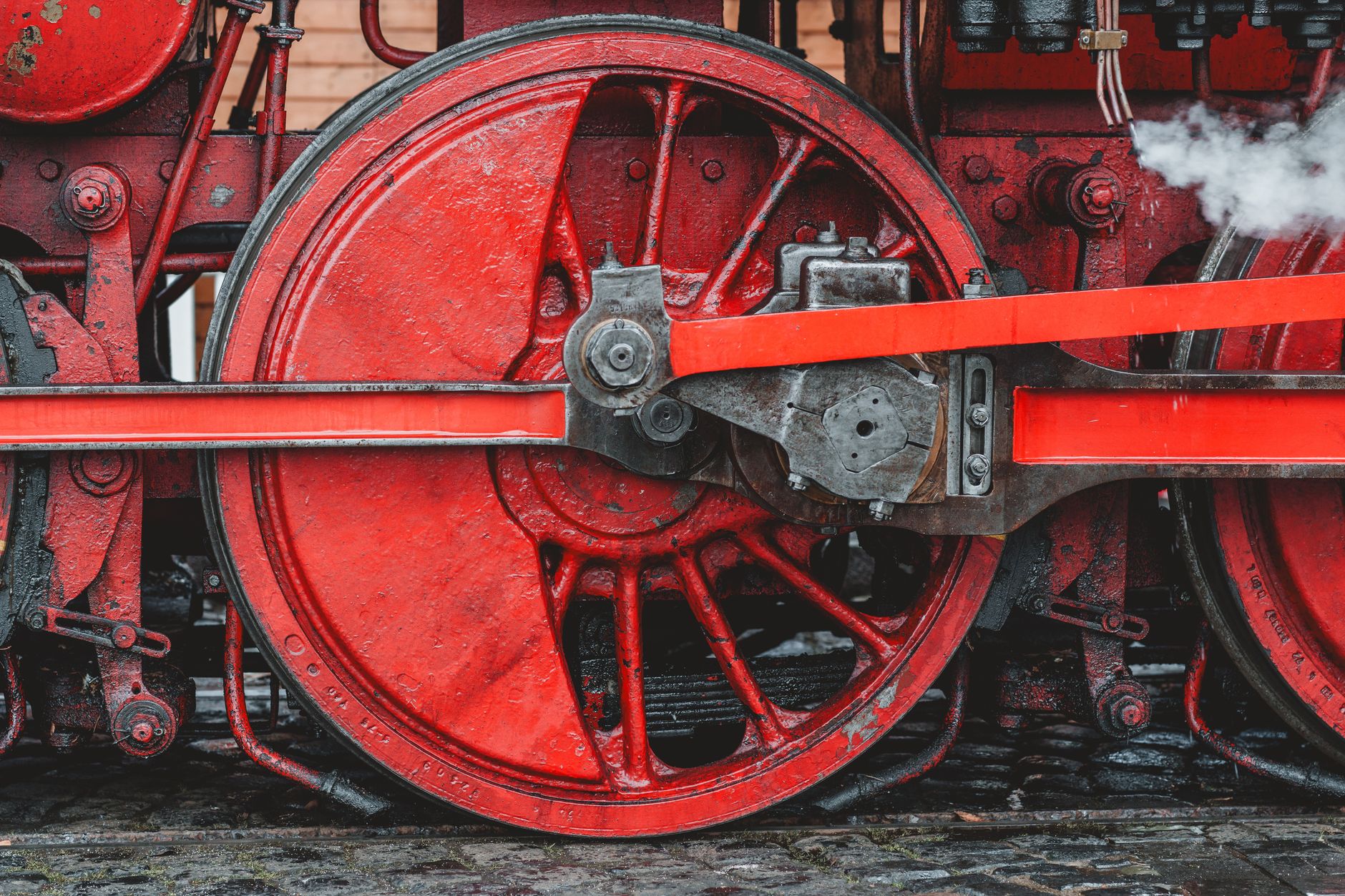 MHI 004The Steam Engine1712 (Newcomen); 1765 (Watt)Heat from burning coal makes steam; steam pushes a piston; the piston turns a wheel. The first practical engines pumped water out of mines. Improved versions powered mills, ships and trains.