Museum of the Human Inventions
Back to the collection

MHI 008 · Exhibition

The Computer

1936–1948

Disputed attribution

Germany, United Kingdom and United States

Associated with

Charles Babbage
Designed the Analytical Engine from 1837
Ada Lovelace
Published notes on the Analytical Engine in 1843, including a method for computing Bernoulli numbers
Alan Turing
Described a universal computing machine in 1936
Konrad Zuse
Built the Z3 in Berlin, 1941
Tommy Flowers
Engineer of the Colossus codebreaking machines
J. Presper Eckert and John Mauchly
Designed ENIAC
Kay McNulty, Betty Jennings, Betty Holberton, Marlyn Meltzer, Frances Spence and Ruth Teitelbaum
Programmed ENIAC
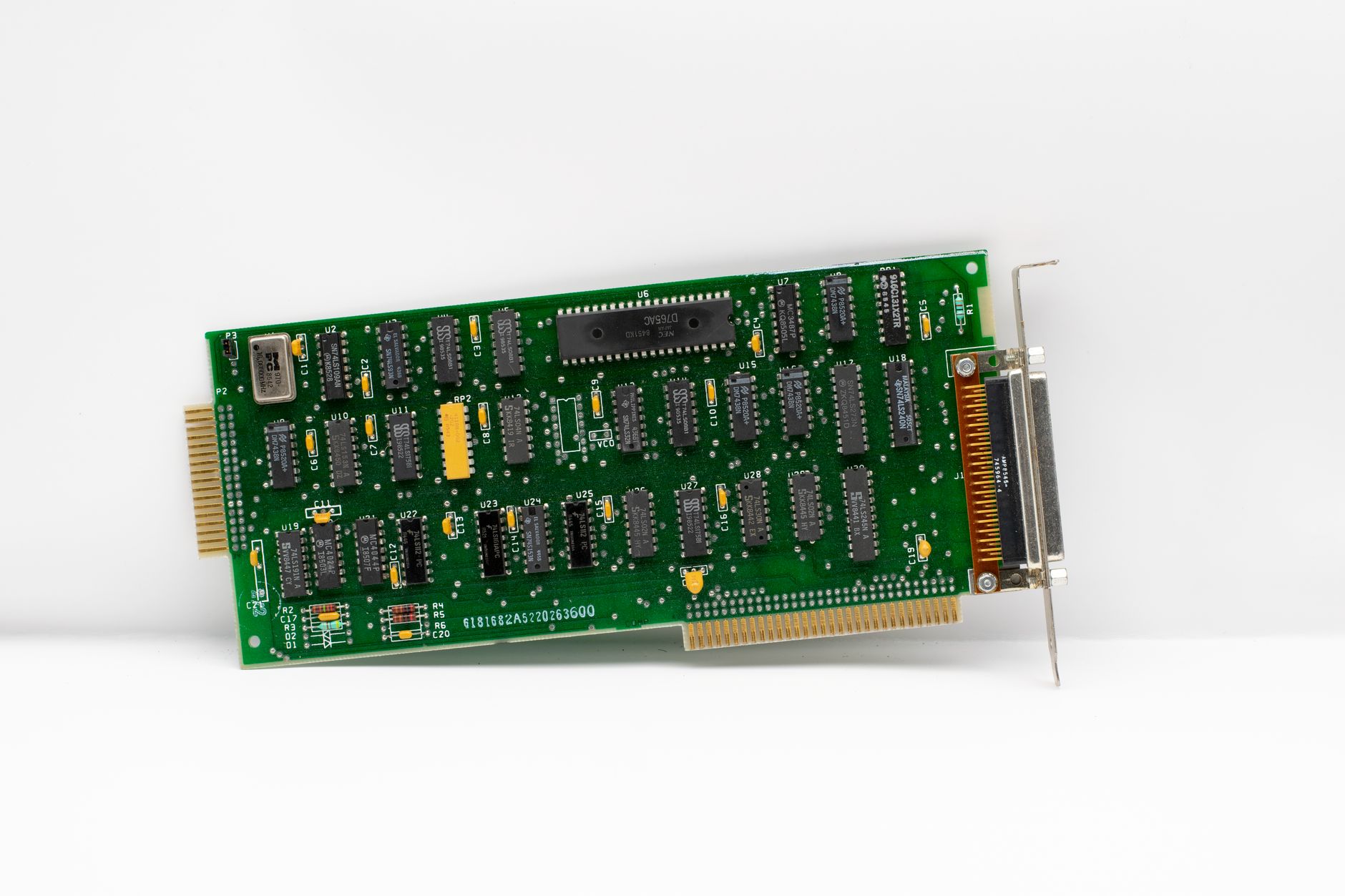
Plate for the exhibition on The Computer
Illustrative photograph, not the original artifact. Photograph: Nicolas Foster / Pexels

About this date

Which machine was “first” depends on the definition. Konrad Zuse’s Z3 (1941) was the first working programmable automatic digital computer; Colossus (1943–44) and ENIAC (1945–46) followed; the Manchester Baby ran the first stored program in 1948.

About credit

The computer was never invented at a single moment. Theory, mechanical design, electrical engineering and programming each had different pioneers, working in separate countries and, in wartime, often in secret.

Chapter I

The world before

Calculation was human work

Calculations for astronomy, navigation, engineering and the census were done by people, called “computers”, using tables, slide rules and mechanical calculators. Errors crept in and complex problems took weeks.

Records were kept on paper, in filing cabinets and card catalogues. Searching them meant walking to the drawer.

The human achievement

An idea first, then machines

In 1837 Charles Babbage designed the Analytical Engine, a mechanical, programmable calculator that was never built. In 1843 Ada Lovelace published extensive notes on it, including a method for calculating Bernoulli numbers and the speculation that such a machine might manipulate things other than numbers.

In 1936 Alan Turing described an abstract machine that could carry out any calculation given the right instructions. In 1941 Konrad Zuse completed the Z3 in Berlin. At Bletchley Park, Colossus, designed by Tommy Flowers, helped break German ciphers from 1943–44. In the United States, ENIAC was completed in 1945 and publicly announced in 1946; six women, including Kay McNulty and Betty Jennings, programmed it.

The Manchester Baby ran the first stored program in June 1948. The transistor (1947, Bell Laboratories) and the integrated circuit (1958–59, Jack Kilby and Robert Noyce) made computers smaller, faster and cheaper.

Understanding the invention

How it works

A computer follows instructions stored in memory, one tiny step at a time.

Step 01 of 04

Everything is a number

Text, images and sound are encoded as patterns of ones and zeros, called bits.

IV

The transformation

What changed for humanity

  1. Science

    Computers handle climate models, genome sequencing and simulations that would be impossible by hand.

  2. Work

    Records, accounting, design and manufacturing were digitised, and whole professions changed.

  3. Medicine

    Imaging, diagnostics and research depend on computation.

  4. Daily life

    Computers are embedded in phones, cars, appliances and infrastructure.

It made information itself a material that could be stored, copied, searched and transformed. Almost every modern field now depends on it.

Before and after

Life before and after The Computer

Before

Teams of people calculated tables by hand, taking weeks.

After

The same calculations run in seconds.

On larger screens, drag the divider (or use the arrow keys) to give more room to the world before or after.

VI

Its legacy

What came after

MHI 008

The Computer

  • In this museum

    The Internet

    Networks connect computers; the Internet is that idea at planetary scale.

  • In this museum

    The Light Bulb

    The vacuum tubes in early machines descend from experiments with lamp filaments.

  • Beyond the collection

    Artificial intelligence

    Turing’s questions about machine intelligence continue in current research.

  • Beyond the collection

    Robotics and automation

    Computer control underlies modern manufacturing and logistics.

VII

Human stories

The people and the moments

Ada Lovelace’s notes

Lovelace’s 1843 notes on Babbage’s engine are among the earliest published descriptions of a computing program, and they imagined uses beyond arithmetic. Historians continue to debate how much of the mathematics was hers, but her authorship of the notes is documented.


The ENIAC programmers

Six women programmed ENIAC without a manual, working out how to wire and set the machine themselves. Their work was long overlooked in accounts of the machine.

Where accounts differ, this museum follows the documented record and says so.

Built with