A needle that did not point quite north
Shen Kuo noticed the needle pointed slightly off true north. Understanding that offset, now called declination, remains important to navigators and surveyors.
MHI 003 · Exhibition
11th–12th century (as a navigation tool)
Approximate dateChina, with independent written descriptions later in Europe
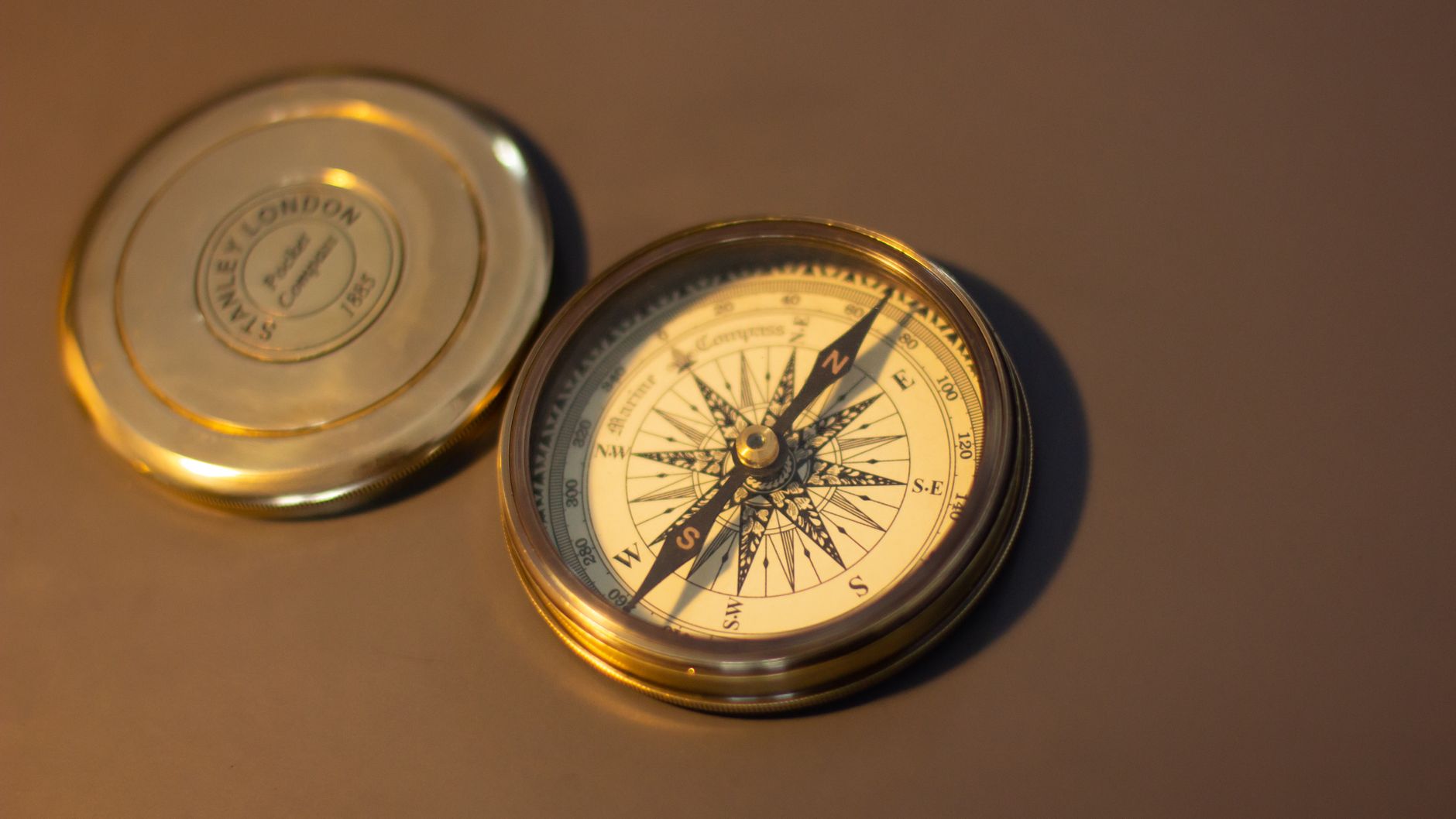
Lodestone devices existed in Han-dynasty China as early as the 2nd century BCE. The magnetised needle for navigation is described in China in 1088 and in Europe by about 1190.
No single inventor is known. Early lodestone devices were used for geomancy and divination; the progression to a floating or pivoted needle for navigation is documented in Chinese texts first.
The world before
Travellers found their way by landmarks, the position of the sun, and the stars at night. Pilots hugged coastlines and waited for clear weather.
Overcast skies and open water removed every reference, and sailors who lost sight of land often had no reliable way to know where they were heading.
The human achievement
In Han-dynasty China, lodestone, a naturally magnetic mineral, was shaped into pointers used for geomancy. Over centuries, makers learned that iron needles could be magnetised by rubbing them on lodestone.
The scholar Shen Kuo described such a needle in his Dream Pool Essays (1088) and noted that it points slightly off true north, an observation we now call magnetic declination. By 1117, Zhu Yu described its use by sailors.
European writers describe a similar device soon after, with Alexander Neckam referring to a sailor’s needle around 1190. Whether knowledge travelled between regions or was developed separately is not established.
Understanding the invention
The Earth acts like a very weak bar magnet, and a free magnetised needle lines up with it.
Step 01 of 04
Currents in the planet’s molten outer core generate a field that runs roughly north to south at the surface.
IV
The transformation
Ships could hold courses across open water and in poor visibility. Charts began to include compass bearings.
Long ocean voyages, including Zheng He’s expeditions in the early 15th century and later European Atlantic crossings, relied on a combination of compass, charts and celestial observation.
Portolan charts, with networks of compass lines, appeared in the Mediterranean from the 13th century.
In 1820 Hans Christian Ørsted noticed a compass needle twitch near an electric current, a key step towards electromagnetism.
It gave navigators a way to hold a course when the sun and stars were hidden, helping sea voyages to become planned journeys rather than coastal hops.
Before and after
Before
Navigators hesitated or sheltered when sun and stars vanished.
After
The needle gave a heading in any weather.
On larger screens, drag the divider (or use the arrow keys) to give more room to the world before or after.
VI
Its legacy
MHI 003
The Compass
In this museum
The TelephoneThe study of magnetism and its link with electricity, sparked by compass observations, underlies telegraphs and telephones.
In this museum
The AirplaneEarly aviators navigated by compass; its descendants remain on every cockpit panel.
Beyond the collection
The gyrocompass
Introduced in the early 20th century, it finds true north without magnetism.
Beyond the collection
Modern satellite navigation
Systems such as GPS replace the compass for position, though phones still carry magnetometers for heading.
Human stories
Shen Kuo noticed the needle pointed slightly off true north. Understanding that offset, now called declination, remains important to navigators and surveyors.
The compass is a reminder that many inventions are the work of communities across centuries. Naming one inventor would erase the people who tested and refined the idea.
Where accounts differ, this museum follows the documented record and says so.
Next in the museum
Related exhibitions
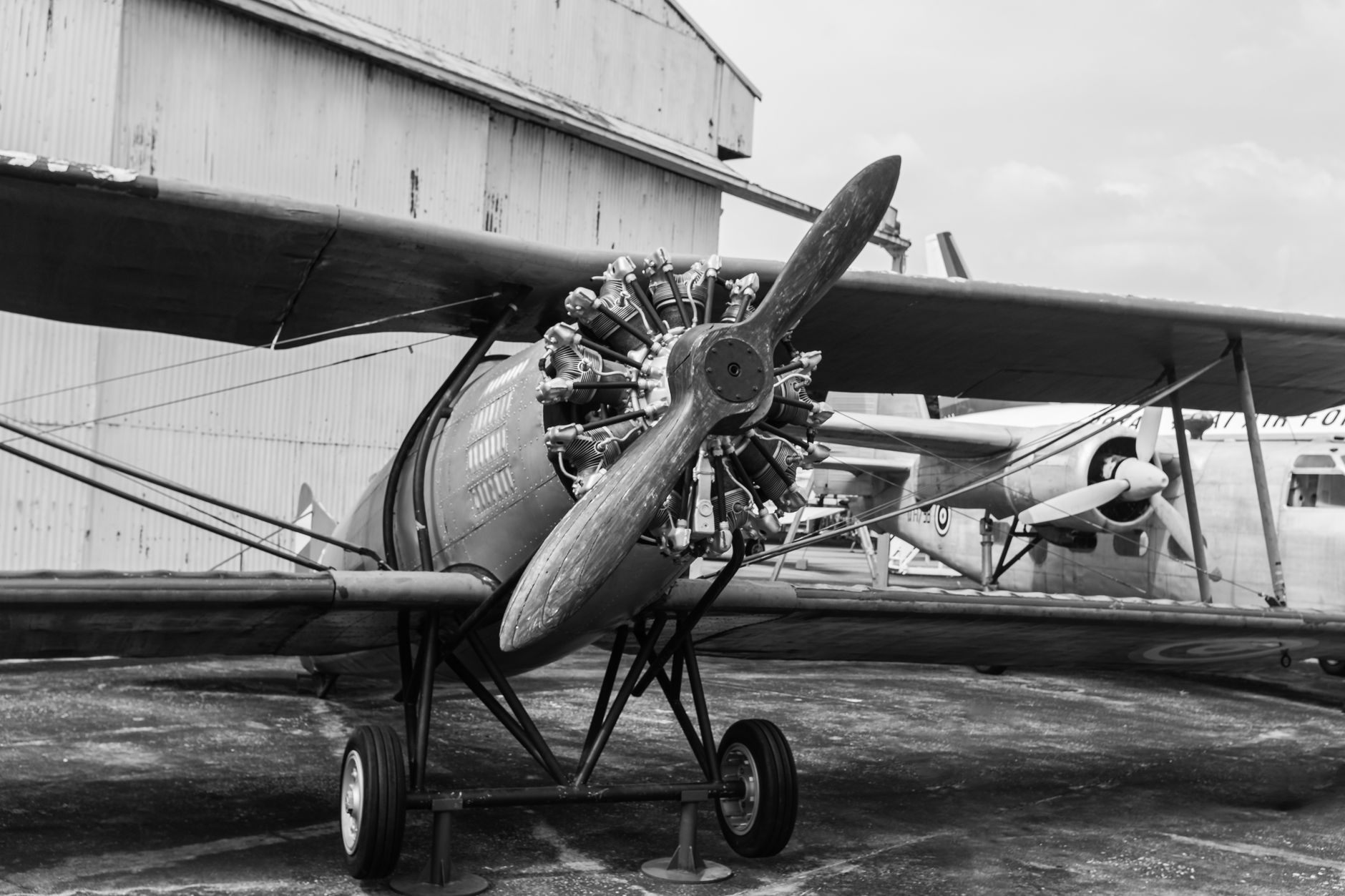 MHI 007The Airplane17 December 1903Wings produce lift as air flows over them; an engine and propeller provide thrust; and movable surfaces let the pilot control the aircraft in three dimensions.
 MHI 005The Telephone1876A diaphragm vibrates with the voice, varying an electric current that recreates the sound at the other end of a wire.
 MHI 001The Wheelc. 3500–3350 BCEA disc or spoked ring turning on an axle replaced dragging and carrying with rolling. The oldest surviving wooden wheel with its axle, from the Ljubljana Marshes in Slovenia, has been radiocarbon-dated to about 3150 BCE.