Mills in the Domesday Book
The great survey of England in 1086 lists more than 5,000 mills, showing how widespread water power had become by that time.
MHI 021 · Exhibition
c. 3rd century BCE onward
Approximate dateThe eastern Mediterranean, later across Europe and Asia
Plate 021
c. 3rd century BCE onward
The eastern Mediterranean, later across Europe and Asia
Greek writers such as Philo of Byzantium describe water-driven mechanisms in the 3rd century BCE. The Roman engineer Vitruvius describes water-driven mills in the 1st century BCE.
The device appears in written sources from the Hellenistic and Roman world. Similar machines developed independently in China.
The world before
Grinding grain was hard manual work, done by hand with querns or by animals turning millstones.
The human achievement
Engineers set a wheel into a stream, with paddles or buckets catching the current. Gears carried the rotation to a millstone. By the Middle Ages, water power drove mills across Europe, and Domesday Book (1086) records thousands of mills in England.
Understanding the invention
The Water Wheel, explained in two steps.
Step 01 of 02
Water pushing on the paddles (or falling into buckets) turns the wheel.
IV
The transformation
Flour milling became faster, cheaper and less laborious.
Water power drove sawmills, forges, fulling mills and, eventually, textile factories.
It was the first widely used non-muscle power source. For two thousand years it ground grain, sawed wood, hammered iron and powered early factories.
Before and after
Before
Hours of hand-turning for a small amount of flour.
After
A river doing the work all day.
On larger screens, drag the divider (or use the arrow keys) to give more room to the world before or after.
VI
Its legacy
MHI 021
The Water Wheel
In this museum
The Steam EngineEarly steam engines were often used to pump water back over mill wheels.
Beyond the collection
Hydroelectric power
Turbines are direct descendants of the wheel.
Human stories
The great survey of England in 1086 lists more than 5,000 mills, showing how widespread water power had become by that time.
Where accounts differ, this museum follows the documented record and says so.
Next in the museum
Related exhibitions
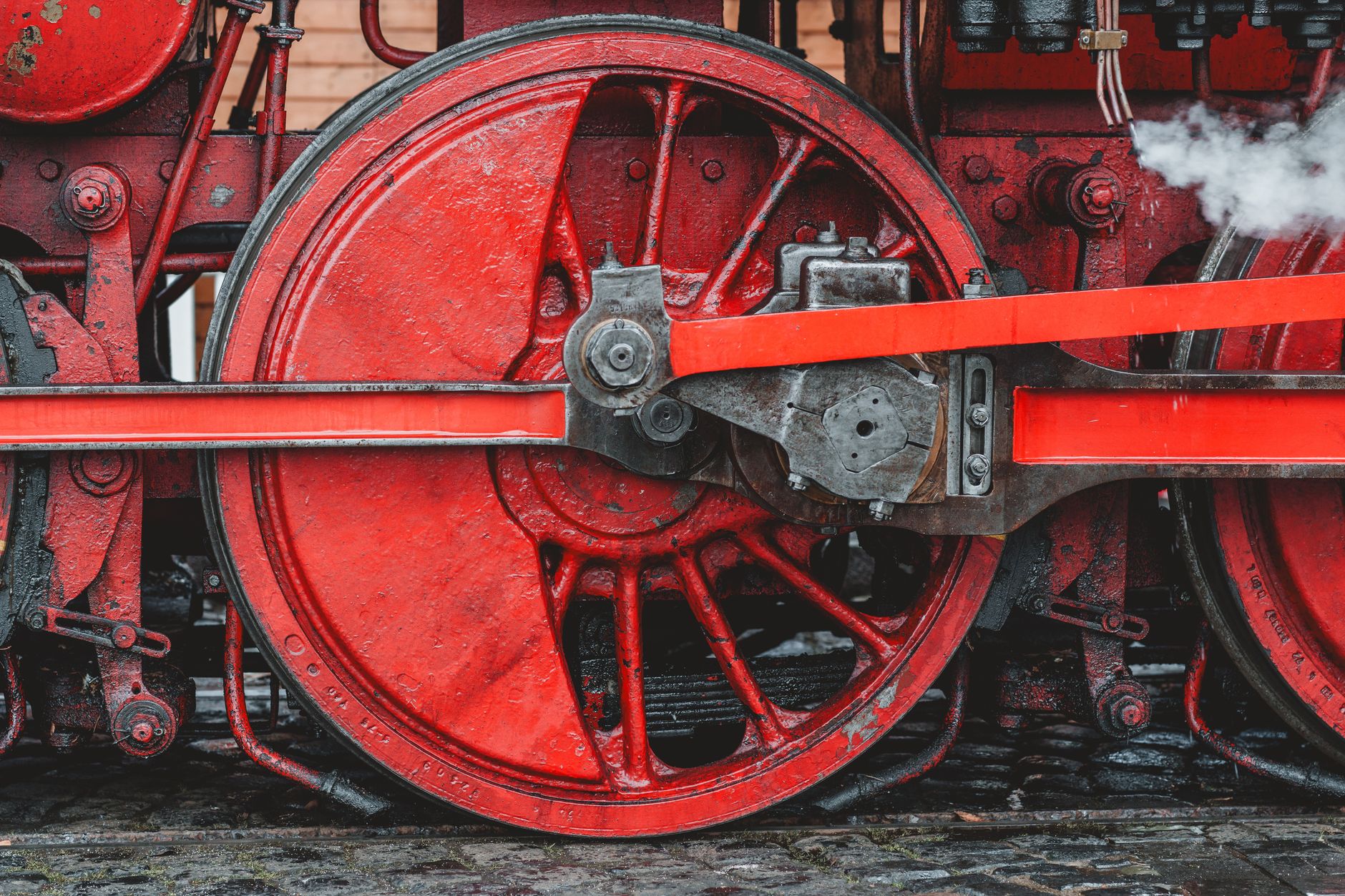 MHI 004The Steam Engine1712 (Newcomen); 1765 (Watt)Heat from burning coal makes steam; steam pushes a piston; the piston turns a wheel. The first practical engines pumped water out of mines. Improved versions powered mills, ships and trains.